
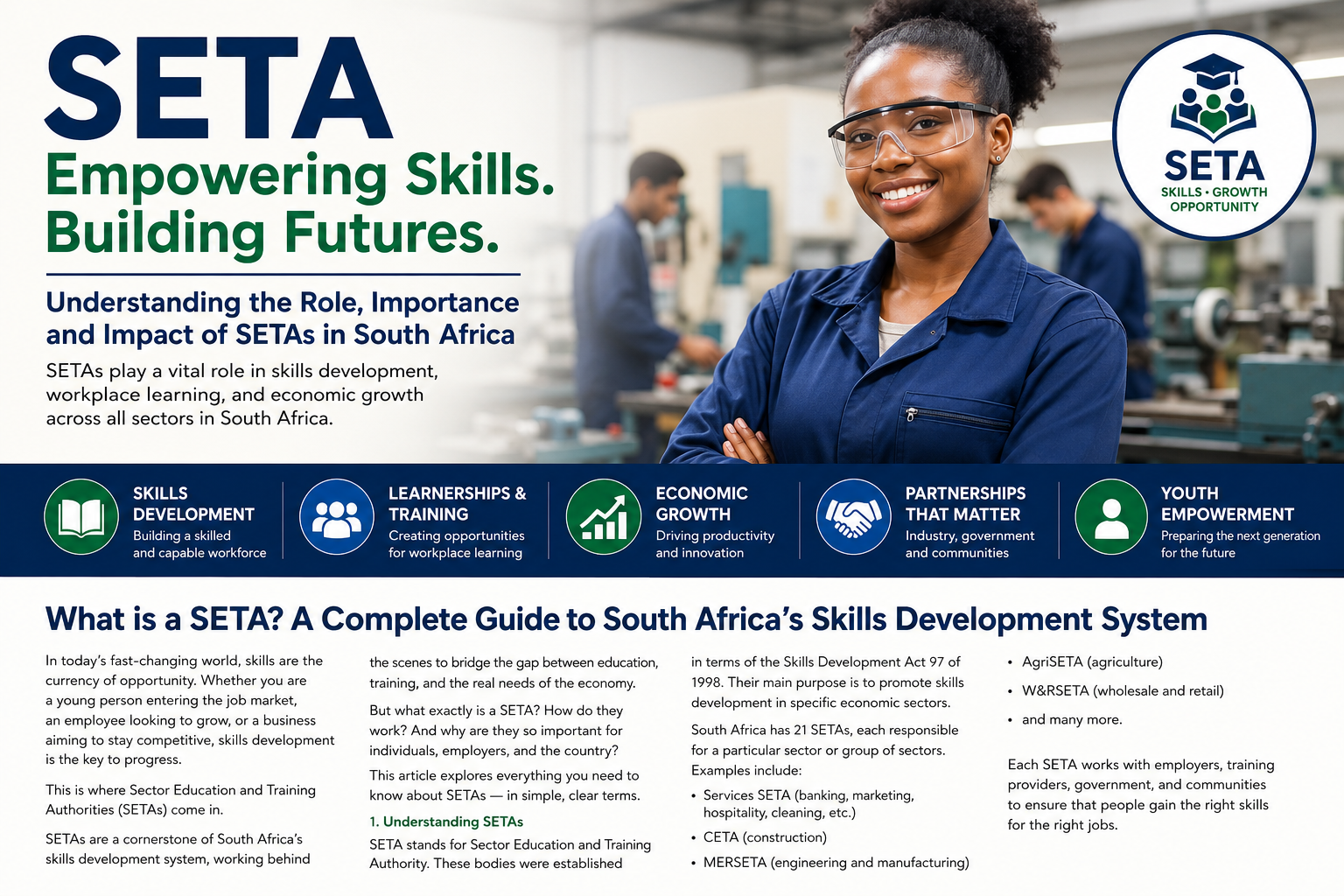
South Africa’s labour market is constantly evolving, and employers are increasingly looking for candidates who have both qualifications and practical workplace experience. Many young people, graduates, and unemployed job seekers often ask the same question: What is a SETA, and how can it help me build a career?
Sector Education and Training Authorities (SETAs) are at the heart of South Africa’s skills development strategy. They connect education with industry needs by supporting learnerships, internships, apprenticeships, bursaries, artisan training, and workplace learning opportunities.
Whether you have recently completed Matric, graduated from a university or TVET college, or are looking to improve your employability, understanding how SETAs work can open doors to valuable career opportunities.
What Is a SETA?
A Sector Education and Training Authority (SETA) is a statutory body established under the Skills Development Act, 1998 (Act 97 of 1998). SETAs are overseen by the Department of Higher Education and Training (DHET) and are responsible for developing skills within specific sectors of the South African economy.
Each SETA works closely with employers, training providers, organised labour, and government to identify skills shortages and create training programmes that prepare people for employment.
Their primary goal is simple: to develop a skilled workforce that supports economic growth while helping South Africans gain meaningful employment.
Why Were SETAs Created?
South Africa has long faced challenges such as high unemployment, skills shortages, and unequal access to quality training. Many employers struggled to find workers with the practical skills required for the workplace, while many job seekers lacked opportunities to gain work experience.
SETAs were created to bridge this gap by:
- Improving workplace training
- Expanding access to vocational education
- Supporting youth employment
- Developing industry-specific skills
- Encouraging employers to invest in staff development
- Promoting lifelong learning
Today, SETAs remain one of the country’s most important mechanisms for workforce development.
How Do SETAs Work?
Each SETA is responsible for a specific economic sector. They work with businesses to identify industry needs and support training programmes that help develop skilled workers.
Their responsibilities include:
Related Opportunities 2026
- Registering learnerships
- Accrediting workplace learning programmes
- Funding skills development initiatives
- Supporting internships and apprenticeships
- Monitoring training quality
- Promoting artisan development
- Encouraging employer participation in skills development
- Supporting national employment strategies
Rather than employing people directly, SETAs help create opportunities by funding and coordinating skills development programmes.
The Main Functions of a SETA
Every SETA performs several key functions that contribute to South Africa’s workforce development.
1. Skills Planning
SETAs conduct research to determine which occupations are in demand and where skills shortages exist. This information helps shape future training programmes.
2. Learnership Development
Learnerships combine classroom learning with practical workplace experience, allowing participants to gain nationally recognised qualifications while learning on the job.
3. Internship Support
SETAs encourage employers to offer internships that provide graduates with valuable work experience in their chosen fields.
4. Apprenticeship and Artisan Training
Many technical careers require apprenticeships and trade testing. SETAs support artisan development in occupations such as plumbing, electrical work, welding, mechanical engineering, and construction.
5. Quality Assurance
Training providers and employers must meet specific standards to ensure learners receive quality education and workplace experience.
6. Employer Skills Development
Businesses receive guidance on workplace training, employee development, and compliance with skills development legislation.
How Many SETAs Are There?
South Africa currently has 21 Sector Education and Training Authorities, each responsible for a different industry.
Some of the most recognised SETAs include:
- AgriSETA
- BANKSETA
- CETA (Construction Education and Training Authority)
- CHIETA
- ETDP SETA
- EWSETA
- FOODBEV SETA
- FP&M SETA
- HWSETA
- INSETA
- LGSETA
- merSETA
- MICT SETA
- PSETA
- SASSETA
- Services SETA
- TETA
- W&RSETA
Each organisation focuses on the training needs of its specific sector.
What Is a Learnership?
A learnership is one of the most popular opportunities supported by SETAs.
It is a structured programme that combines:
- Formal learning
- Practical workplace experience
- Mentorship
- Assessment
- Nationally recognised qualifications
Most learnerships run for 12 months, although some programmes may be shorter or longer depending on the qualification.
Participants often receive a monthly stipend to help cover transport and daily living expenses, although the amount varies by programme.
What Is an Internship?
Internships are designed primarily for graduates and students who need workplace experience.
Unlike learnerships, internships may not always lead to a formal qualification. Instead, they focus on helping participants apply their academic knowledge in real working environments.
Internships can improve employability by allowing candidates to:
- Build practical skills
- Develop professional confidence
- Gain industry exposure
- Strengthen their CVs
- Expand professional networks
What Is an Apprenticeship?
Apprenticeships are intended for technical and trade occupations.
These programmes combine classroom instruction with extensive hands-on workplace training.
Examples include:
- Electricians
- Plumbers
- Fitters
- Welders
- Boilermakers
- Motor mechanics
- Millwrights
Successful apprentices usually complete trade testing before becoming qualified artisans.
Who Can Benefit from SETA Programmes?
SETA-supported opportunities are available to a wide range of South Africans.
They are especially beneficial for:
- Unemployed youth
- Matric graduates
- TVET College students
- University graduates
- People with disabilities
- Career changers
- Employees seeking further qualifications
- Aspiring artisans
- Small business owners
Eligibility requirements vary depending on the specific programme.
Benefits of Participating in SETA Programmes
Thousands of South Africans participate in SETA-supported initiatives every year because they offer practical advantages.
Some of the key benefits include:
Practical Work Experience
Employers often prioritise candidates who have real workplace experience.
Nationally Recognised Qualifications
Many learnerships result in qualifications registered on the National Qualifications Framework (NQF).
Improved Employability
Participants develop technical and soft skills that employers value.
Professional Networking
Working alongside experienced professionals helps learners build valuable industry connections.
Career Progression
Many participants use learnerships and internships as stepping stones toward permanent employment.
Skills Developed Through SETA Training
Beyond technical knowledge, participants often develop transferable workplace skills such as:
- Communication
- Teamwork
- Customer service
- Time management
- Leadership
- Digital literacy
- Problem-solving
- Critical thinking
- Workplace ethics
- Health and safety awareness
These skills remain valuable across multiple industries.
How Employers Benefit
SETA programmes also provide advantages for employers.
Businesses can:
- Develop future talent
- Address skills shortages
- Improve productivity
- Build stronger workforces
- Support transformation objectives
- Invest in employee development
- Contribute to national economic growth
Many organisations view workplace learning as a long-term investment rather than a short-term recruitment strategy.
Challenges Facing Skills Development
While SETAs have contributed significantly to workforce development, several challenges remain.
These include:
- High demand for limited opportunities
- Unequal access in rural communities
- Limited awareness among job seekers
- Economic pressures affecting recruitment
- Competition for placements
Despite these challenges, skills development continues to play a vital role in South Africa’s economic future.
How to Prepare for SETA Opportunities
If you hope to apply for future learnerships or internships, preparation is essential.
Keep the following documents updated:
- South African ID
- Curriculum Vitae (CV)
- Certified academic certificates
- Proof of residence (if required)
- Driver’s licence (where applicable)
- References
- Contact details
Also ensure your email address and cellphone number remain active so employers can reach you.
Avoiding Recruitment Scams
Unfortunately, scammers sometimes target job seekers.
Remember these important safety tips:
- Never pay application fees.
- Verify opportunities through official employer or SETA websites.
- Avoid sharing sensitive banking information unnecessarily.
- Be cautious of unsolicited messages promising guaranteed employment.
- Confirm vacancy details before submitting documents.
Legitimate employers and SETAs generally do not charge candidates simply to apply.
The Future of Skills Development in South Africa
As industries embrace automation, renewable energy, digital technology, advanced manufacturing, and artificial intelligence, demand for skilled workers will continue to grow.
Future training priorities are expected to include:
- Information technology
- Cybersecurity
- Green economy careers
- Renewable energy
- Digital marketing
- Data analysis
- Healthcare support
- Logistics and supply chain management
- Advanced manufacturing
- Entrepreneurship
SETAs will continue playing an essential role in helping South Africans prepare for these emerging career opportunities.
Final Thoughts
Sector Education and Training Authorities remain one of South Africa’s most important tools for reducing unemployment and improving workforce readiness. By supporting learnerships, internships, apprenticeships, artisan training, and workplace learning, SETAs create pathways that help people gain practical experience, recognised qualifications, and valuable career skills.
Whether you are a school leaver, university graduate, TVET student, or someone looking to change careers, understanding how SETAs operate can significantly improve your chances of accessing meaningful opportunities. Staying informed, preparing your application documents, and applying through official channels are important steps toward building a successful career.
About the Author
Careersza Editorial Team publishes independent, human-written career guidance focused on South African learnerships, internships, apprenticeships, bursaries, TVET education, and skills development. Our mission is to help job seekers make informed decisions using clear, accurate, and up-to-date information.
Sources and References
- Department of Higher Education and Training (DHET)
- Skills Development Act 97 of 1998
- South African Qualifications Authority (SAQA)
- Quality Council for Trades and Occupations (QCTO)
- National Skills Authority (NSA)
- National Skills Development Plan (NSDP) 2030
- Official websites of South Africa’s Sector Education and Training Authorities (SETAs)
Disclaimer
This article is provided for educational and career guidance purposes only. Careersza is an independent information platform and is not affiliated with any SETA, government department, employer, or recruitment agency. Readers should verify programme requirements, application dates, and eligibility criteria through official sources before applying.
